Making “special” brownies is a right of passage for cannabis lovers, but as I learned as a novice canna-baker, it’s not as simple as sprinkling some flower into your batter. You have to decarboxylate it first.
Decarboxylation isn't rocket science — it's easy to DIY at home with an oven and basic supplies. A touch of knowledge and the right tools are all you need, and guess what? We're here to equip you with both.

Decarboxylation is a chemical reaction that is accelerated by heat. When cannabis is decarboxylated, the plant’s psychoactive compounds are activated, unlocking its ability to cause a high when consumed and other results.
One key activation that occurs through decarboxylating cannabis is the transformation of tetrahydrocannabinolic acid (THCA) into tetrahydrocannabinol (THC). The THCA in raw cannabis won’t get you high, but when heat is applied, the organic compound known as a carboxyl group is removed, leaving you with THC.
Decarboxylation doesn’t only unlock THC. It also turns cannabidiolic acid (CBDA) into cannabidiol (CBD) and works its magic on the many compounds in the cannabis plant.
Decarboxylation occurs naturally with time when cannabis is exposed to oxygen and light, but adding heat speeds up the process. When you hold a flame to weed or use a vaporizer, you can see decarboxylation in real-time.
Although decarboxylation is generally a good thing, it’s not necessarily something you want happening on its own because it can diminish the flavor and freshness of your flower. To prevent decarboxylation, store your herbs in airtight herb storage containers to keep oxygen away.
If your consumption method involves smoking, vaping, or dabbing, you’ve got your decarb bases covered because you’re already applying heat. However, in the case of edibles, you’ll need to decarboxylate before you get cooking.
Whether you’re using your oven or a decarboxylation system, the idea is to heat the buds and activate the THC and other cannabinoids before making your butter or oil infusion. You also need to decarb your herb before making canna honey.
No elaborate equipment or supplies are required for your homegrown decarbing adventure. Just follow the straightforward steps below, and you're all set to embark on this DIY journey.
Heads up: Be prepared for a strong aroma of baking cannabis. You are roasting your weed, after all! Open some windows and turn on some fans.

SUPPLIES
INSTRUCTIONS
That’s it! Your cannabis is decarboxylated.
If you’re looking for a cleaner, easier way to decarb cannabis—especially for regular edible making—use Levo II+:
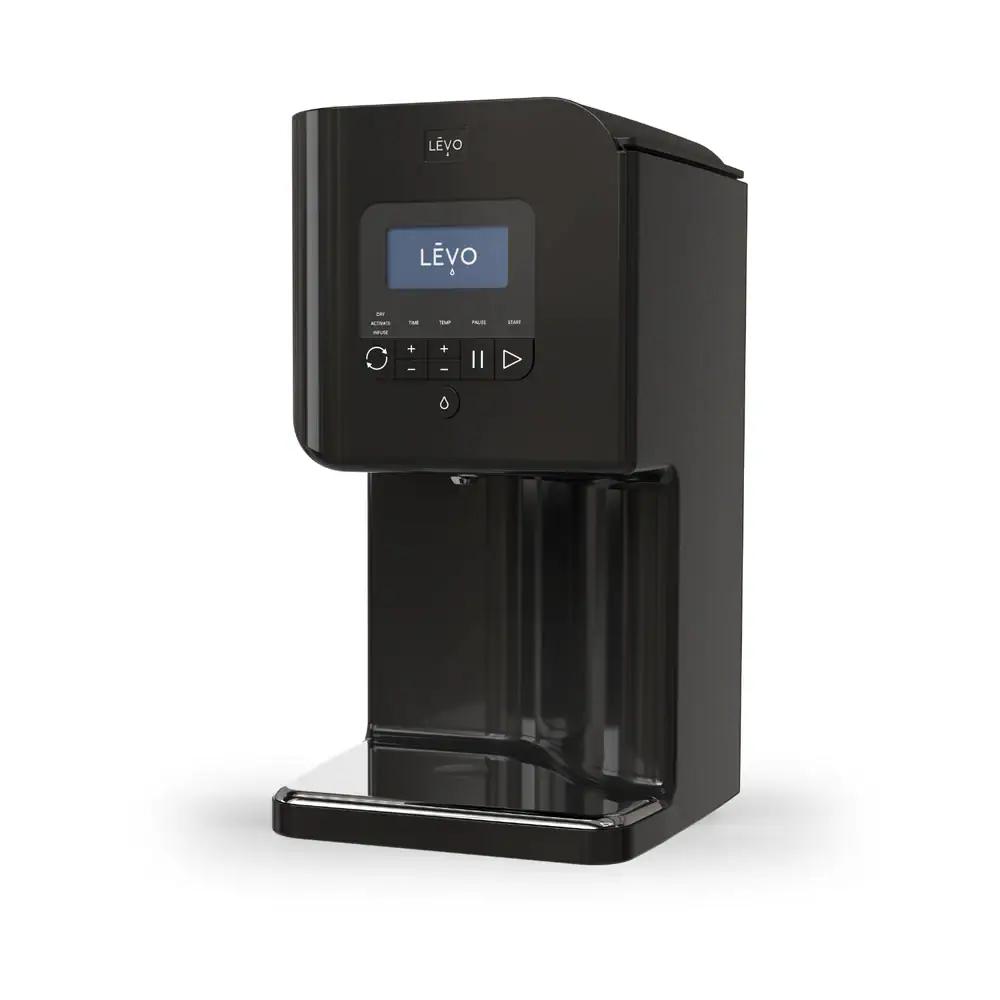
The LĒVO II+ decarbs and infuses your cannabis automatically with precise, pre-set temperatures and odor control. Perfect for making oils, butter, and edibles at home.
You can now use your flower to make butter or oil for baking and cooking. Decarboxylated cannabis can be infused into food and drinks to create your own cannabis-infused edible brownies, gummies, beverages and even salad dressings.
If you don’t plan on using your decarboxylated cannabis immediately, store it in an airtight container in a cool, dry, dark place.
A temperature of 250°F will activate THC. However, oven temperatures fluctuate throughout cooking cycles, so it’s generally recommended that you set your oven to 230°F.
Temperatures higher than 300°F can be detrimental to THC and other cannabinoids, but the cannabinoid CBN is activated at 320°F. So, depending on the results you’re looking for, you might opt to set your oven a little higher than the decarb temperature for THC.
Keep in mind that oven temperatures can be off by as much as 90 degrees. (1) An oven thermometer is a worthy (and small) investment that will give you a clear picture of your oven’s accuracy.
| Desired Active Cannabinoid | Temperature | Time (Minutes) |
| THC | 250°F | 30 |
| CBD | 280°F | 60 |
| CBG | 215°F | 60 |
| CBN | 320°F | 90 |
Cannabinoid activation information source: Magical Butter
Decarboxylation is a chemical reaction that removes a carboxyl group from a molecule and releases carbon dioxide. In the context of cannabis, decarboxylation refers to the process by which the non-psychoactive cannabinoids present in raw cannabis, such as THCA and CBDA, are converted into their psychoactive or active forms, such as THC and cannabidiol CBD.
When cannabis is decarboxylated, it activates the cannabinoids, making them easier for your body to absorb, and increases the potency of the cannabis, allowing it to have a greater effect on your body and mind. Skipping this step will result in lackluster edibles and infusions.
Decarboxylation occurs naturally when cannabis comes in contact with heat and light, but you can decarboxylate cannabis to make edibles in an oven or with a decarboxylation.


Copyright © 2025 Green Bee Life | Green Bee LLC, is a subsidiary of Green Life Media, Inc., a full service creative agency and production company.